Підручник Англійська мова 5 клас (5-й рік навчання) - А.М. Несвіт - Генеза 2018 рік
Unit 4.Let's Have a Rest
Lesson 1
1. Look at the pictures and say what the children like to do in their free time.
Example:
Ann likes to go for a walk in the park at the weekend.
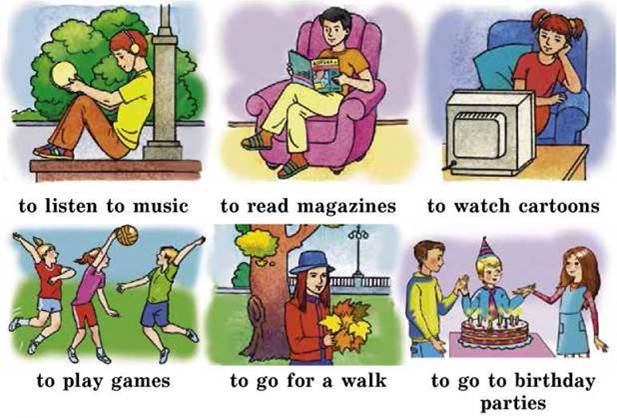
2. Work in pairs. Talk about the things you like to do in your free time.
Example:
A: What do you like to do in your free time?
B: I like to read books and go for a walk with my friends. And what about you?
A: I like to play tennis.
3. Listen, read and say what the children like to do.

Sue: I often listen to pop music, and I watch TV a lot. I love films, but I don’t like to watch soap operas. I don’t read very much - magazines sometimes, but not books.
John: I’ve got a lot of friends. They often come to my home, and we spend time together. I like to play active games with them.
Richard: I like to stay at home. Sometimes I read books or listen to music - classical music only. I don’t watch TV very much, but I usually watch cartoons, or sometimes films. I often study in the evening.
Mary: I like to visit my friends and play computer games with them. I don’t like to stay at home. It’s boring. I also spend much time outdoors.
4. Look through the text of Ex. 3 again and say who:

Conversation Lab
5. Work in pairs.
a) Write a list of questions to ask your friends about their free time activities.
Example:
• Do you watch TV a lot?
• Do you like to watch films or cartoons?
• Do you play any musical instrument?
• Do you go in for sport?
• How often do you train?
b) Ask your friends about the things they do outside school. Use the questions from your list.
6. Write 7-8 sentences about the activities you usually do in your free time. Use Ex. 3, page 75 as an example.
Перша публікація: 01/01/2018
Останнє оновлення: 31/12/2023
Редакційна та навчальна адаптація: Даний матеріал зведено на основі першоджерела/оригінального тексту. Команда проєкту здійснила редакційне оглядове опрацювання, виправлення технічних неточностей, структурування розділів та адаптацію змісту до навчального формату.
Що було опрацьовано:
- усунення форматних дефектів (OCR-помилки, розриви структури, дефектні символи);
- редакційне упорядкування змісту;
- уніфікація термінів відповідно до академічних джерел;
- перевірка відповідності фактичних тверджень тексту першоджерела.
Усі згадки про автора, рік видання та походження первинного тексту збережено відповідно до джерела.