Підручник Англійська мова 9 клас (9-й рік навчання) - О. C. Любченко - Основа 2017 рік
UNIT 5 Reliance on Science
Lesson 7 TRUNCHEON OF LUNCHEON
1. Look at the picture. What does it tell you about? Can you guess what the story below will be? What makes you think so? Share your ideas with your classmates.

2. Read the story to see if you are right or wrong. Do the after-reading exercises.
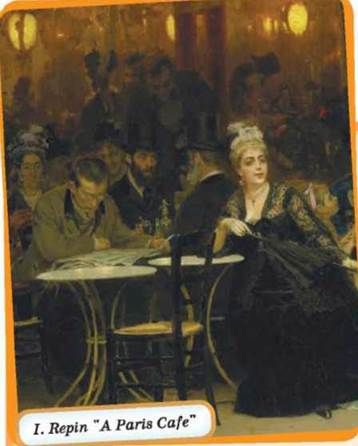
THE LUNCHEON
(After W. Somerset Maugham)
It was long since I had last seen her.
"How time flies! We're not getting younger. Do you remember the first time I saw you? You asked me to luncheon."
Did I remember?
Twenty years ago in Paris I had barely enough money to keep body and soul together. She had written to me about my book saying she would like to have a chat with me; so could I give her a little luncheon at Foyot’s*, which was so far beyond my means that I had never thought of going there. But I was too young to say no to a woman.
She was a woman of forty and made the impression of having more teeth than necessary for any practical purpose.
The prices were much higher than I had expected, but she said:
"I never eat anything for luncheon. A little fish, maybe. I wonder if they have any salmon.
It was early for salmon, but yes, a beautiful salmon had just come in. The waiter asked if she would have something before.
"No," she said, "I never eat more than one thing. Unless you have a little caviar."
For myself I chose the cheapest dish.
"I think it is unwise to eat meat," she said.
Then came the question of drink.
"I never drink anything for luncheon," she said. «Except white wine."
"What would you like?"
She gave me a friendly flash of her teeth.
"My doctor won't let me drink anything but champagne."
I ordered half a bottle. I said my doctor had banned me to drink champagne.
She ate the caviar and the salmon and talked of literature and music.
"Eating a heavy luncheon is a mistake. Why don't you follow my example and just eat one thing?"
* Foyot's - a famous restaurant in Paris at the end of the 19th century
The waiter came again.
"No, no, I never eat anything for luncheon. Just a bite, and more as an excuse for conversation than anything else. I couldn't eat anything more unless they have some of those asparagus."
My heart sank.
"Do you have any of asparagus," I asked the waiter trying with all my might to make him say no. With a happy smile over his face, he said they had some so large, so splendid, that it was a marvel.
"I'm not hungry," my guest sighed, "but if you insist I don't mind some asparagus. Aren't you going to have any?"
"No, I never eat it."
Panic seized me. It was not a question how much money I could have for the rest of the month, but whether I had enough to pay the bill.
I watched the wicked woman thrust the asparagus down her throat. At last she finished.
"Coffee?" I said.
"Yes, just an ice-cream and coffee," she answered.
Then a terrible thing happened. While we were waiting for the coffee, the head waiter, with a smile on his false face, came up with a basket full of peaches. They surely were not in season. Lord knew what they cost. My guest, going on with her conversation, absentmindedly took one.
"You're full and can't eat any more. But I've just had a snack and I’ll enjoy a peach."
The bill came, and when I walked out of the restaurant I had the whole month before me and not a penny in my pocket.
"Follow my example," she said, "and never eat more than one thing for luncheon."
I do not believe that I am a ruthless man, but when the gods put a hand in, it is excusable to watch the result with satisfaction. Today she weighs twenty-one stone**.
3. Work in pairs. Look at the words in bold in the context and match them with their opposites. Explain both of the meanings in your own words in pairs.
1) |
barely enough |
a) norm |
2) |
unwise |
b) pleasant |
3) |
marvel |
c) a lot of |
4) |
wicked |
d) friendly |
5) |
absentmindedly |
e) advisable |
6) |
ruthless |
f) attentively |
Did you know?
The first chocolate bar appeared in Britain in 1847.
4. Look at the words in bold in the context and choose the closest definition from the variants A, B or C). Replace them in the story and explain your choice to other students.
A |
B |
C |
|
1. to keep body and soul together |
to manage without much money |
to be in wealth |
to be in good health |
2. flash |
blink |
ginger |
smile |
3. excuse |
preposition |
reason |
wish |
** stone - measure of weight (1 stone = 6,4 kg)
A |
B |
C |
|
4. heart sank |
heart in smb’s boots |
lost heart |
lost hope |
5. sighed |
breathed out |
took a breath |
blown |
6. insist |
stand |
want |
order |
7. seized |
caught |
thought |
met |
5. Decide if the statements are True or False and mark them with T / F. Explain your choice to your classmates.
1) The main part of the story happened many years ago.
2) The author of the story was a young writer then.
3) The lady he had luncheon with, was his old friend.
4) The lady ate the cheapest dishes.
5) The writer had been supported in his work by the lady.
6) The waiter played a little joke on the author.
7) The author was afraid of the lack of money to pay the bill.
8) The lady taught the author how to eat better.
9) The author appeared moneyless for two months.
10) The author of the story was fully satisfied with the way the lady looked.
6. Answer the questions in turns. To prove your point, find the necessary information in the story. Share your ideas with others.
1) Whom did the author meet?
2) What happened twenty years ago?
3) Was the author a real gentleman? Why?
4) What did the lady look like at the first meeting? During the last meeting? Describe her appearance. What happened? Why do you think so?
5) How many dishes did the lady eat at luncheon? What about the author? Give examples.
6) What can you say about the waiter’s behavior? Can you explain it?
7) Use two character traits to describe the characters of the story. Support each trait with a detail from the story.
8) How does the main character feel at the end of the story? What makes you think so?
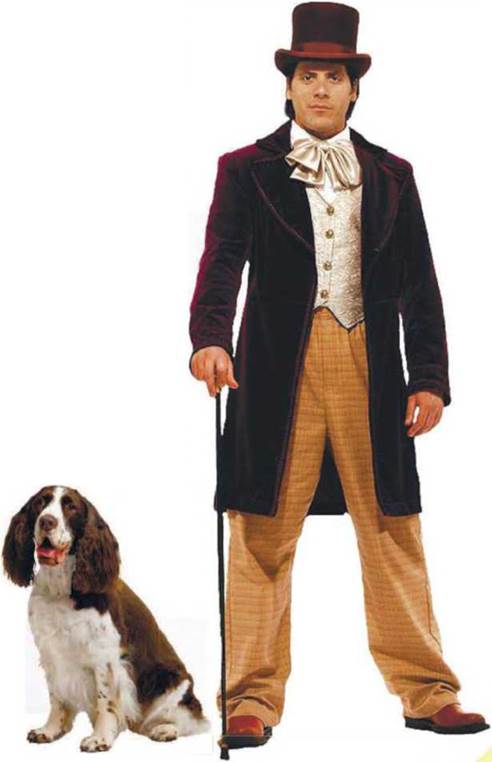
7. Make up a brief description of the author of the story — possible appearance, possible clothing, traits of character — as if he were your close friend.
Перша публікація: 01/01/2017
Останнє оновлення: 31/12/2023
Редакційна та навчальна адаптація: Даний матеріал зведено на основі першоджерела/оригінального тексту. Команда проєкту здійснила редакційне оглядове опрацювання, виправлення технічних неточностей, структурування розділів та адаптацію змісту до навчального формату.
Що було опрацьовано:
- усунення форматних дефектів (OCR-помилки, розриви структури, дефектні символи);
- редакційне упорядкування змісту;
- уніфікація термінів відповідно до академічних джерел;
- перевірка відповідності фактичних тверджень тексту першоджерела.
Усі згадки про автора, рік видання та походження первинного тексту збережено відповідно до джерела.